

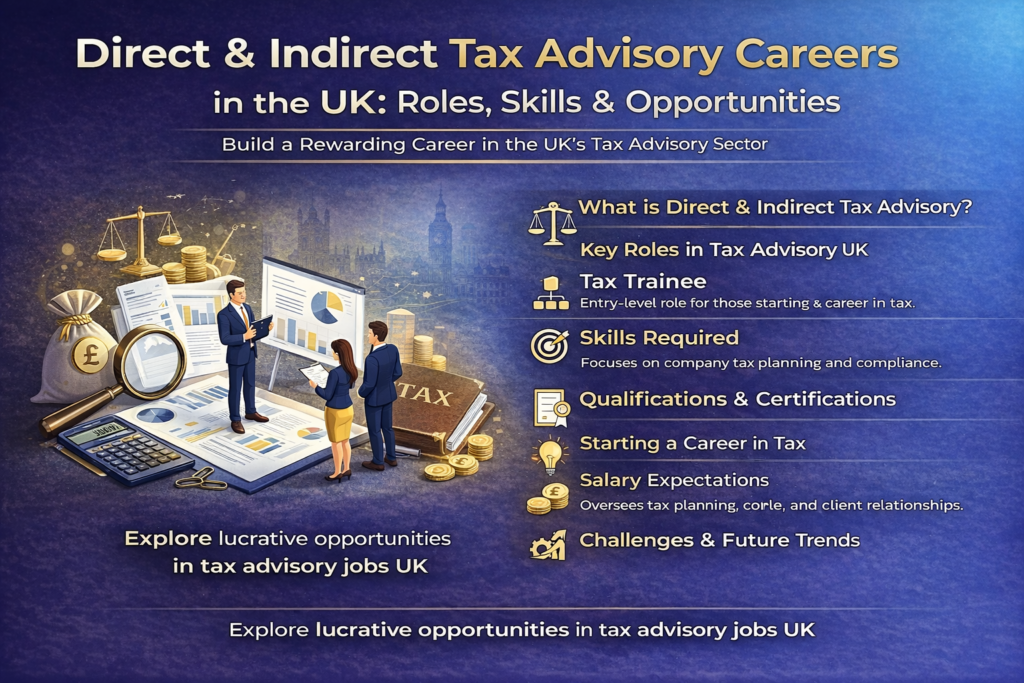
Direct & Indirect Tax Advisory Careers in the UK: Roles, Skills & Opportunities
Tax advisory is a critical function within the UK finance industry, helping businesses comply with complex regulations while optimising their tax strategies. From corporate tax planning to VAT compliance, professionals in this field play a key role in ensuring financial efficiency and legal compliance.
With evolving regulations and increased scrutiny, careers in tax advisory UK, including corporate tax jobs UK and VAT specialist roles, are in high demand across accounting firms, multinational companies, and advisory practices.
What is Direct & Indirect Tax Advisory?
Tax advisory is divided into two main areas:
Direct Tax
Includes taxes directly imposed on income or profits, such as:
- Corporation tax
- Income tax
- Capital gains tax
Indirect Tax
Includes taxes applied to goods and services, such as:
- Value Added Tax (VAT)
- Customs duties
- Excise duties
Tax professionals help businesses comply with these regulations while identifying opportunities for tax efficiency.
Key Roles in Tax Advisory UK
There are multiple career paths within tax advisory:
Tax Trainee / Graduate
Entry-level role for those starting a career in tax.
Corporate Tax Analyst
Focuses on company tax planning and compliance.
VAT Specialist
Handles indirect tax matters, particularly VAT compliance and advisory.
Tax Consultant
Advises clients on tax strategies and regulatory requirements.
Tax Manager / Director
Oversees tax planning, compliance, and client relationships.
Skills Required for Tax Advisory Careers
To succeed in tax advisory careers in the UK, candidates need both technical and analytical expertise.
Technical Skills:
- Knowledge of UK tax laws and regulations
- Understanding of VAT and corporate tax
- Financial analysis and reporting
- Compliance and documentation
Soft Skills:
- Attention to detail
- Analytical thinking
- Problem-solving
- Communication and advisory skills
These skills are essential for navigating complex tax frameworks and advising clients effectively.
Qualifications & Certifications
Most tax roles require:
- A degree in Accounting, Finance, or Law
- Strong academic background
Professional qualifications are highly valued:
- ATT (Association of Taxation Technicians)
- CTA (Chartered Tax Adviser)
- ACCA or ACA
These certifications significantly improve your chances of securing financial services jobs in the UK.
How to Start a Career in Tax Advisory
Breaking into tax advisory requires a structured approach:
Step 1: Learn Tax Fundamentals
Understand UK tax systems, including corporate tax and VAT.
Step 2: Gain Practical Experience
Internships or trainee roles in accounting firms are highly beneficial.
Step 3: Build a Strong CV
Highlight analytical skills, attention to detail, and relevant coursework.
Step 4: Apply Strategically
Focus on relevant roles rather than applying randomly. You can explore opportunities through the latest tax advisory and accounting job listings available here, where roles reflect current demand in the UK market.
Salary Expectations in Tax Advisory UK
Tax careers offer competitive salaries with strong growth potential.
Typical Salary Range:
- Entry-level (Trainee): £25,000 – £40,000
- Mid-level (Consultant): £40,000 – £80,000
- Senior roles: £80,000+
Salaries increase significantly with experience and professional certifications.
Demand for Tax Professionals in the UK
Demand for tax professionals continues to grow due to:
- Complex and evolving tax regulations
- Global business operations
- Increased compliance requirements
- Demand for tax efficiency strategies
Candidates often stay updated by reviewing the latest finance job opportunities across the UK, where tax advisory roles are regularly listed.
Challenges in Tax Advisory Careers
While rewarding, tax careers come with challenges:
- Constant changes in tax laws
- High responsibility for compliance
- Tight deadlines during tax seasons
- Complex regulatory environments
However, these challenges help build strong expertise and long-term career value.
Future of Tax Advisory in the UK
The tax profession is evolving rapidly with technology and regulatory changes.
Key Trends:
- Digital tax systems (Making Tax Digital – UK)
- Automation in tax reporting
- Increased focus on international taxation
- Integration of AI in compliance processes
Professionals who adapt to these trends will have strong career prospects in the UK finance industry.
Learn More About Tax Careers
If you’re planning to enter this field, reviewing a detailed tax advisory career guide for the UK market can help you understand required skills, certifications, and long-term growth opportunities.
Final Thoughts Build a Career in Tax Advisory
Direct and indirect tax advisory offer a stable and high-demand career path within the UK finance sector. With the right qualifications, skills, and strategy, you can build a successful career advising businesses and ensuring compliance with complex regulations.
If you’re ready to take the next step, staying informed and exploring relevant opportunities is essential for long-term success.